Aditya Bedekar
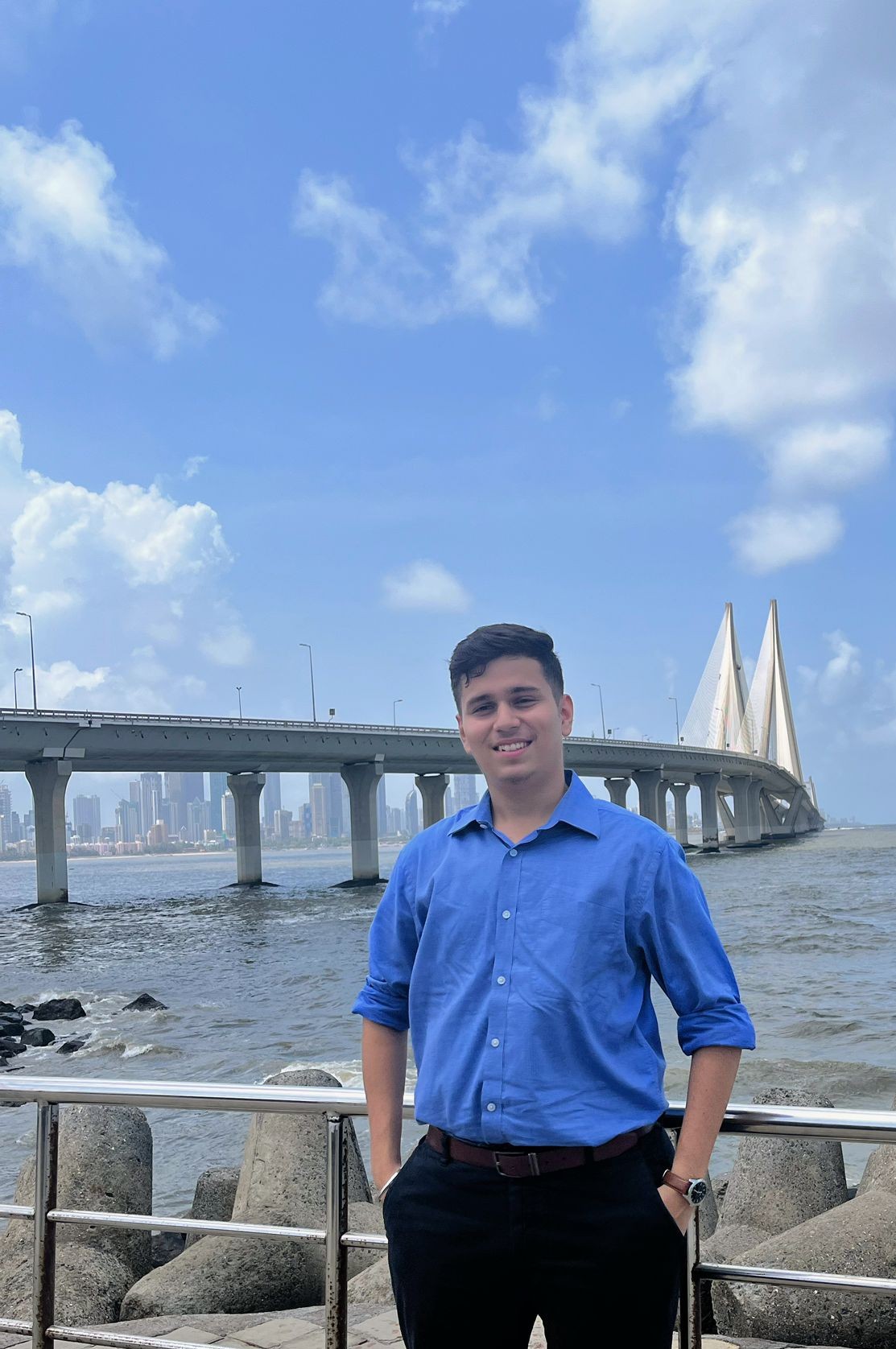
Aditya Bedekar
Resume: Click to View
Linkedin: Click to View
Summary
PhD student in Computer Science and Engineering at UC Santa Cruz, specializing in hardware security, device modeling and reliability, advised by Dr.Dustin Richmond.
Research experience includes thesis work on BTI modeling using TCAD and SPICE to analyze device aging, timing degradation, and security vulnerabilities. Applied AI RAG workflows enabling secure document access and improved engineering productivity. Skilled in digital design, PCB Design, FPGA flows, EDA tools.
Experience
Graduate Student Researcher, Hardware Systems Collective, UC Santa Cruz
Oct 2025 – Dec 2025
- Led advanced BTI reliability modeling at sub-7nm nodes by building scalable SPICE workflows for 7nm FinFET and 3nm GAAFET standard cells across temperature and stress corners.
- Appended BSIM-CMG model card with PDK-consistent, physics-accurate parameters to enable predictive aging analysis.
- Designed a containerized Docker pipeline for automated delay extraction and visualization, enabling rapid comparison of aging-induced propagation delay shifts.
- Designed and simulated a 7nm FinFET inverter in TCAD, extracting device-level aging characteristics.
Graduate Researcher, Hardware Systems Collective, UC Santa Cruz
Jul 2024 – Jun 2025
- Developed a TCAD-based workflow (Synopsys Sentaurus) to model BTI-induced threshold voltage shifts in 7nm FinFET architectures, including stress and recovery.
- Integrated SPICE-based tools (PySpice, Xyce, HSPICE MOSRA) to characterize circuit-level aging, enabling clock-to-Q delay analysis in Sky130 standard cells.
- Simulated PMOS/NMOS degradation under varying stress voltages and temperatures, quantifying BTI impact on timing reliability.
- Investigated hardware security implications of BTI, identifying side-channel vulnerabilities in FPGA fabrics due to NBTI-induced degradation.
Education
University of California, Santa Cruz
PhD, Computer Science and Engineering (Sept 2025 – Expected 06/28)
Coursework: Semiconductor Physics, Nano Electronics, Semiconductor Reliability, TCAD Device and Process Technology
Master of Science, Computer Science and Engineering (Sept 2023 – Jun 2025)
Coursework: Computer Architecture, Digital Design, VLSI, Machine Learning, Digital Signal Processing.
Hands-on with FPGA design (Lattice iCE40), Sky130 PDK, ASAP 7 PDK, and RTL-to-GDSII flows.
University of Mumbai
Bachelor of Engineering, Electronics (Aug 2019 – Jun 2023)
Coursework: Digital Logic Circuits, Computer Networks, VLSI Design.
Built foundational skills in logic design, networking, and VLSI through lab projects.